
Search Became Conversational
Instead of typing short keyword phrases, users now ask full questions such as "Which SEO agency in Dubai is best for local ranking growth?" or "Who can help improve organic traffic for a law firm in Dubai?"
How brands win visibility in ChatGPT, Copilot, Gemini, Perplexity, and Google AI search in 2026.
Answer engine optimization in Dubai is now a practical growth channel for brands that want visibility beyond traditional Google rankings. As people increasingly use ChatGPT, Copilot, Gemini, Perplexity, and AI search experiences to ask questions, compare providers, and shortlist services, businesses need content that is trustworthy, structured, and easy for both search engines and large language models to understand. AE ADS helps businesses combine SEO, AEO, schema, brand authority, and content strategy so they can appear where modern buyers actually look for answers.
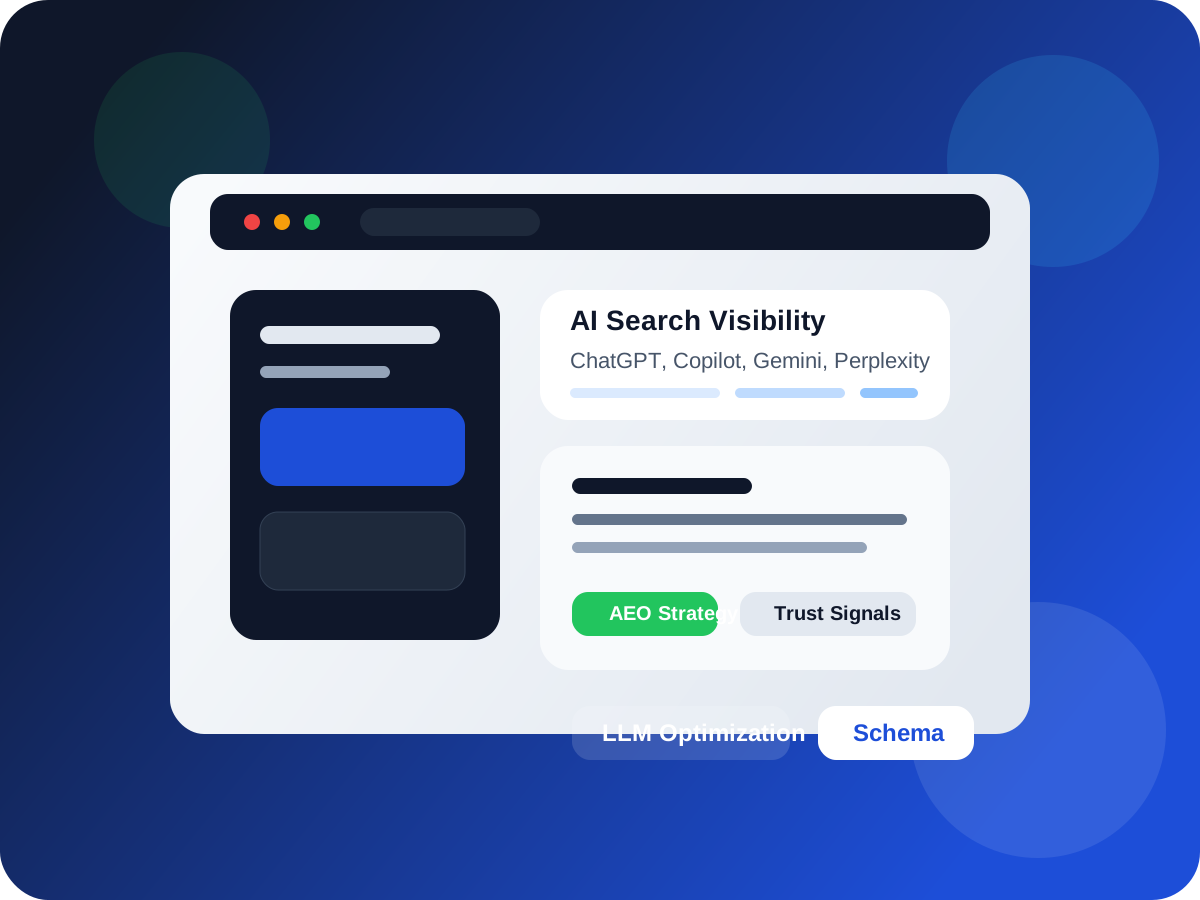
Modern buyers ask detailed questions, compare providers, and evaluate trust before they ever click a website.
Instead of typing a short keyword, users now ask AI tools full, decision-focused questions. A founder might ask, "Which SEO agency in Dubai can help a clinic improve organic leads and local search visibility?" A marketing manager might ask, "What should I look for in an agency if I want SEO, AEO, structured data, and content strategy together?"
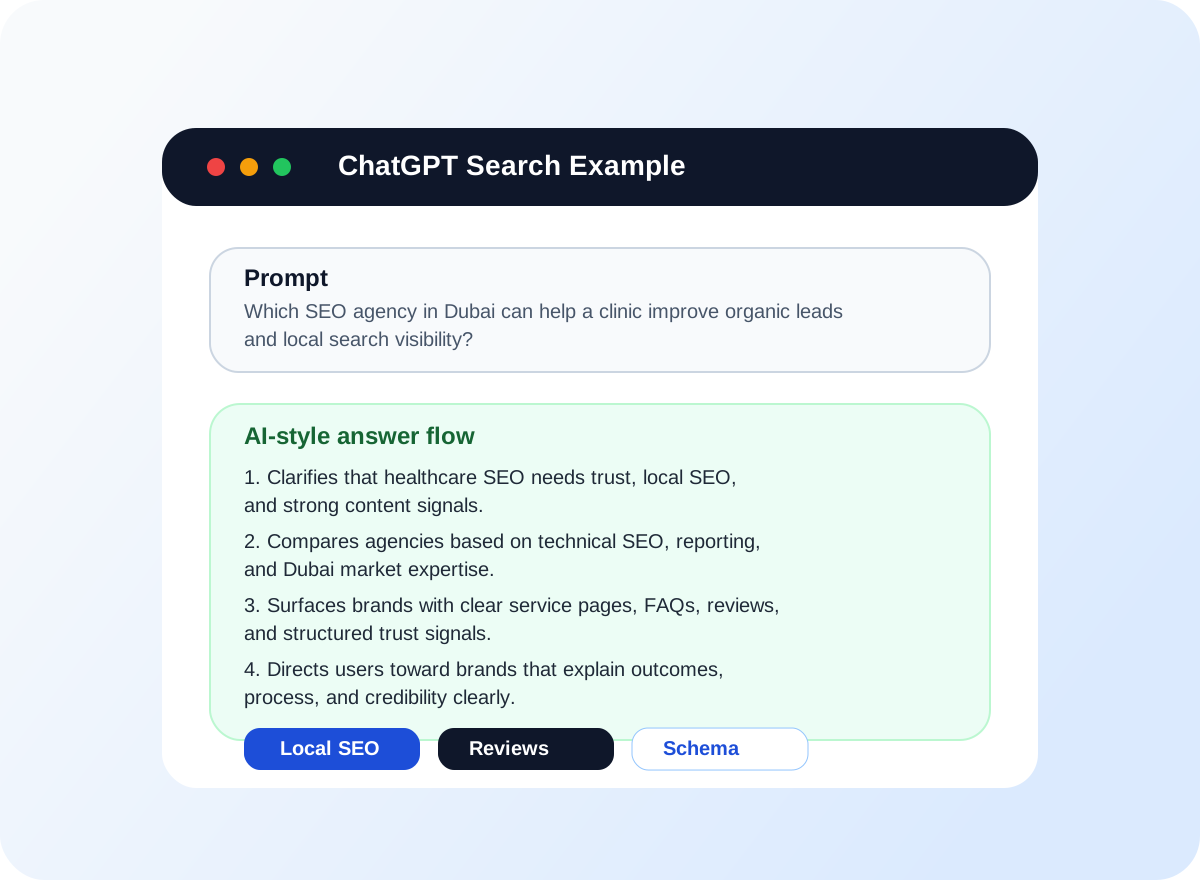
The interface below shows the kind of discovery flow people now use every day. AI tools summarize options, highlight trust signals, and frame which brands feel credible. This is why your website needs clear positioning, service pages, FAQs, reviews, and entity consistency across the web.
People are no longer searching in only one place. They are asking, comparing, validating, and deciding across AI interfaces every day.
Instead of typing short keyword phrases, users now ask full questions such as "Which SEO agency in Dubai is best for local ranking growth?" or "Who can help improve organic traffic for a law firm in Dubai?"

AI tools surface brands that look credible. Reviews, citations, entity consistency, author signals, structured content, and topical authority influence whether your brand is mentioned confidently.

In many AI tools, the first brand interaction happens inside an answer before the user even visits a website. That means your positioning, clarity, and credibility need to be understandable at a glance.
How answer engine optimization works, how people use AI tools daily, and what brands must do to earn visibility.
Answer engine optimization in Dubai has become essential because customer behaviour has changed faster than most marketing teams expected. For years, the default journey was simple: a person opened Google, searched a phrase, reviewed ten blue links, visited a few websites, and then filled out a form or made a purchase. In 2026, that journey is far less linear. People still use Google, but they also use ChatGPT, Microsoft Copilot, Google AI Overviews, Gemini, Perplexity, and other AI assistants to summarize options, compare services, and understand who looks trustworthy before they ever click through to a website.
This is why businesses now need a blended strategy that includes traditional SEO, AEO, LLM optimization, entity building, structured data, and credible content architecture. The goal is not only to rank a page. The goal is to become the kind of business that an AI system can reference, summarize, recommend, and trust in context.
AI tools fit naturally into daily life because they feel faster and more personal than classic search. A user who once typed "best SEO company Dubai" into Google may now ask ChatGPT, "I run a medical clinic in Dubai. Which type of agency should I look for if I want more organic leads without depending only on paid ads?" That difference matters. The second query reveals industry, intent, concerns, and desired outcome. AI tools can interpret all of that instantly.
People use AI assistants because they reduce friction. They help with summarizing options, clarifying next steps, evaluating tradeoffs, and translating technical topics into plain language. Busy founders ask for comparisons. Marketing managers ask for frameworks. Operations teams ask for implementation guidance. Consumers ask for recommendations. In every case, the AI becomes an intermediary between the user and the websites it has learned to trust.
This behaviour is already visible in day-to-day routines:
The common pattern is trust. Users no longer want only links. They want recommendations, explanations, and confidence. That means the brands most likely to win are the ones that look coherent across the open web.
Answer engine optimization means creating a digital presence that is easy for AI systems and search engines to interpret, quote, and recommend. It includes classic SEO foundations such as crawlability, internal linking, page speed, metadata, headings, and content depth. But it also goes further. AEO asks whether your content directly answers real questions, whether your business is represented consistently across platforms, and whether your expertise is clear enough for an answer engine to rely on.
Many businesses mistakenly think AEO is a replacement for SEO. It is not. AEO is an extension of SEO into conversational and AI-driven discovery. If your SEO is weak, your AEO will usually be weak too. If your technical setup is poor, your brand entities are inconsistent, and your content is vague, AI systems have little reason to mention you with confidence.
AI tools create trust differently than traditional search interfaces. Search engines historically showed options and left the evaluation work to the user. AI tools often summarize, interpret, and frame the comparison for the user. That changes how trust is built.
Trust in AI-assisted discovery usually comes from a combination of:
When these elements align, AI tools can describe a brand more clearly. They may say a company appears specialized in local SEO, technical SEO, healthcare SEO, or multilingual optimization. They may mention a strong focus on trust, process, or measurable growth. That narrative is shaped by what your website and the wider web consistently communicate.
The examples below reflect the kind of prompt-driven discovery flow that users now follow inside AI tools before they shortlist a provider or service.
The 2026 landscape is not "Google versus AI." It is an ecosystem where users move fluidly between them. A person may begin in ChatGPT to understand the problem, switch to Google to validate options, view Google Maps for local trust, browse LinkedIn for legitimacy, and revisit an AI assistant for help comparing proposals. Your brand must hold together across that entire path.
Google still matters deeply because it remains a core discovery engine, especially for local and transactional intent. But AI tools are shaping earlier and mid-funnel decisions. They help users refine language, shortlist vendors, and understand what "good" looks like. This means brands that educate well gain an advantage before a buying conversation even begins.
Strong visibility in AI search is built through clarity and consistency. Your site architecture should make it easy to understand what services you offer, who they are for, and what makes your approach different. Each important service should have a dedicated page. Supporting pages should answer adjacent questions. Internal links should connect educational content to commercial pages. This structure helps both human readers and AI systems navigate the relationship between topics.
Brands also need direct-answer content. Many business websites still hide useful information behind vague marketing language. AI systems respond far better to pages that answer questions directly. Instead of saying "we deliver innovative digital growth," say what you actually do: technical SEO audits, local SEO implementation, schema deployment, content strategy, or multilingual optimization. Specificity is easier to trust.
LLM optimization refers to improving how large language models interpret and retrieve signals about your brand. It does not mean writing robotic keyword-stuffed text for machines. It means making your information easy to parse, summarize, and validate. The best LLM-friendly pages are also often the best human-friendly pages because they are structured, explicit, and useful.
Important LLM optimization practices include:
AI systems are cautious around weak or conflicting signals. If one page calls you a performance agency, another calls you a branding firm, and a third barely explains your service model, answer engines struggle to form a confident representation of your brand. On the other hand, when your site consistently communicates that you are, for example, an SEO agency in Dubai with strengths in local SEO, technical SEO, and content-led growth, that clarity compounds.
Authority also comes from topic coverage. If you only have one shallow service page, you give AI systems limited material to work with. If you have a strong service page, supporting blog content, FAQs, examples, and helpful comparison content, you create a deeper evidence base. That helps answer engines understand not only what you do but how well you know it.
At AE ADS, we approach AEO as an advanced extension of SEO. We start by identifying how your target audience actually asks questions in AI tools and search engines. Then we map those question patterns to service pages, supporting articles, FAQs, schema, and entity signals across your site. We review whether your brand is easy to interpret, whether your pages explain value clearly, and whether your content answers commercial questions in language AI systems can summarize accurately.
We also look at trust architecture. That includes reviews, business consistency, industry relevance, authority content, updated pages, and internal links that guide users from education to action. In many cases, brands already have good services but weak articulation. We fix the articulation so both users and AI systems can understand the brand quickly.
SEO is still foundational because AI systems continue to depend on the web. They learn from what is published, indexed, cited, and reinforced by patterns of authority. If your pages are not strong enough to rank, be cited, or be trusted, your visibility in AI systems will often remain weak too. The future is not post-SEO. It is post-basic SEO. Brands now need a richer layer of optimization that includes answer intent, entity confidence, and trust-centered content.
Businesses that want visibility in AI search should audit how clearly their site explains services, location relevance, industry focus, and trust signals. They should build out FAQ content around real customer questions, update old service pages, improve metadata, strengthen schema, and create internal links that connect topic clusters logically. They should also review how their brand appears across important third-party mentions because off-site consistency affects credibility.
The brands that win in 2026 will not be the loudest. They will be the clearest. They will be the businesses that answer real questions, earn trust through structure and substance, and make it easy for AI tools, search engines, and human buyers to understand why they are worth choosing.
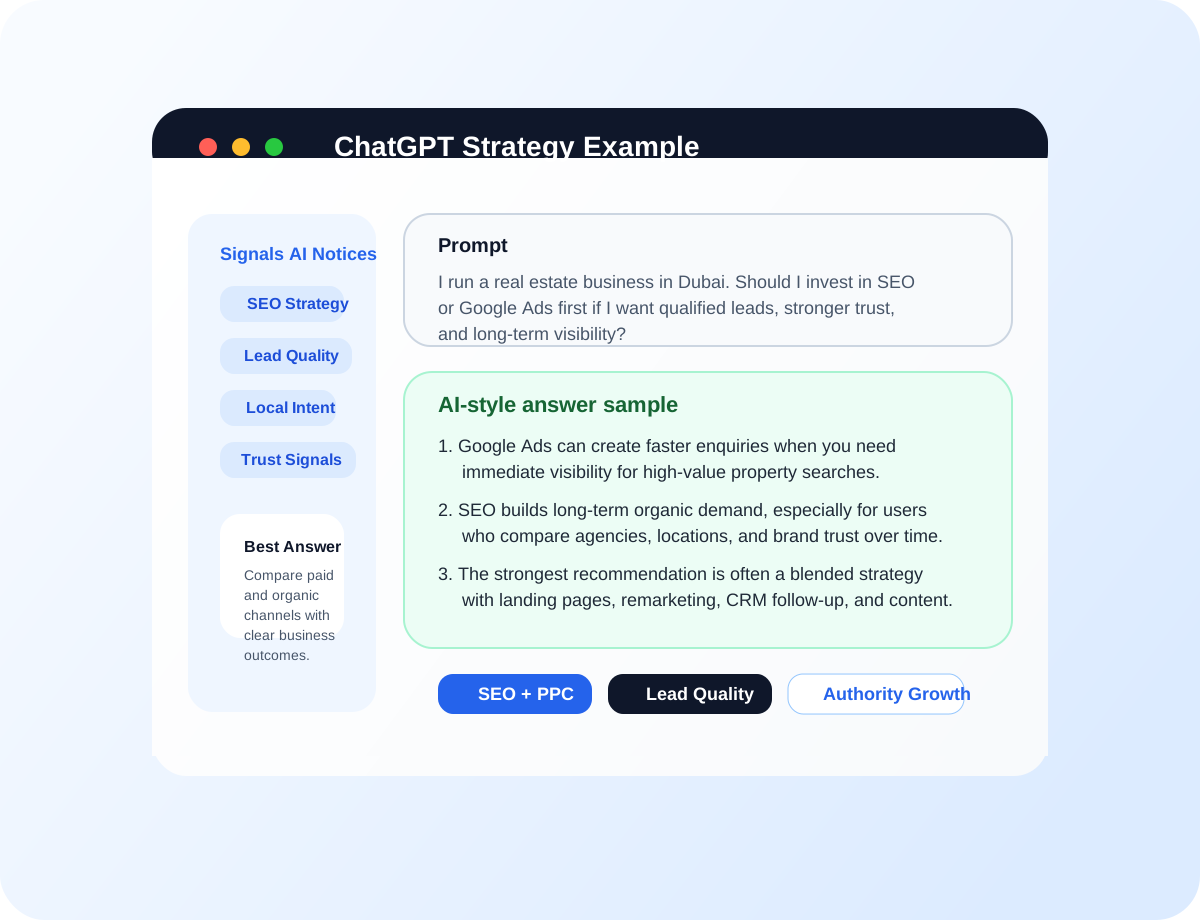
This is how a higher-intent buyer now asks a platform like ChatGPT to compare channels before spending budget.
User prompt: "I run a real estate business in Dubai. Should I invest in SEO or Google Ads first if I want qualified leads?"
A strong AI answer normally explains that Google Ads can drive immediate enquiries while SEO builds sustainable authority and lower-cost organic lead flow over time. The most credible brands are the ones that clearly explain both options, show how each channel fits the buying journey, and connect search visibility to actual lead quality.
This is where AE ADS creates an advantage. Instead of presenting isolated services, we make your website communicate the relationship between SEO, SEM, landing pages, and lead generation so AI tools can understand your expertise with more confidence.
AI platforms now evaluate which agency pages look the clearest, most complete, and most trustworthy.
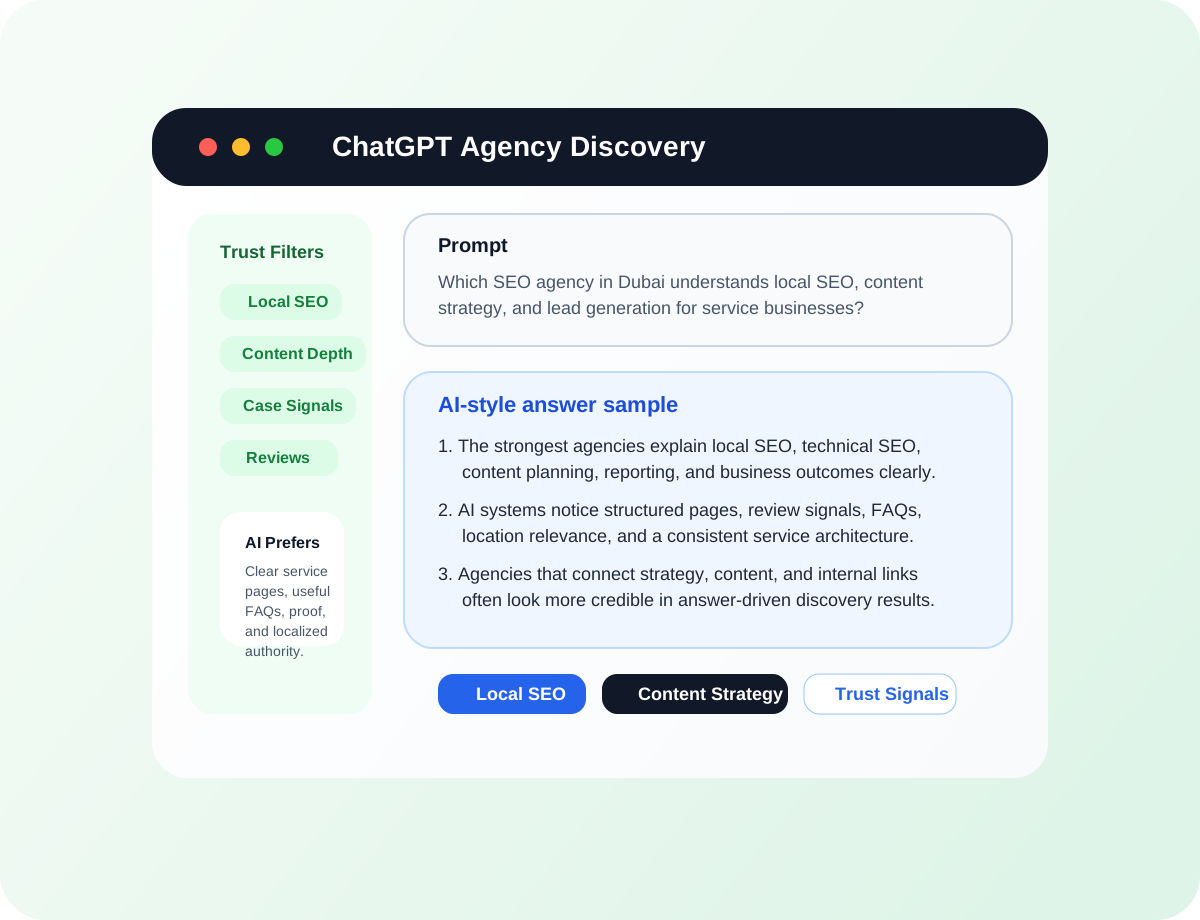
User prompt: "Which SEO agency in Dubai understands local SEO and content strategy for service businesses?"
A useful AI response usually looks for agencies that explain local SEO, technical SEO, reporting, content planning, and UAE market understanding in a clear, structured way. If your website shows that capability across service pages, FAQs, case-study style content, and internal links, your brand becomes easier to recommend.
This is why advanced AEO is not only about adding keywords. It is about making your expertise visually clear and strategically connected, so both people and AI systems can tell you know how to rank on these platforms.
This is where AEO, LLM optimization, schema, and trust architecture come together.
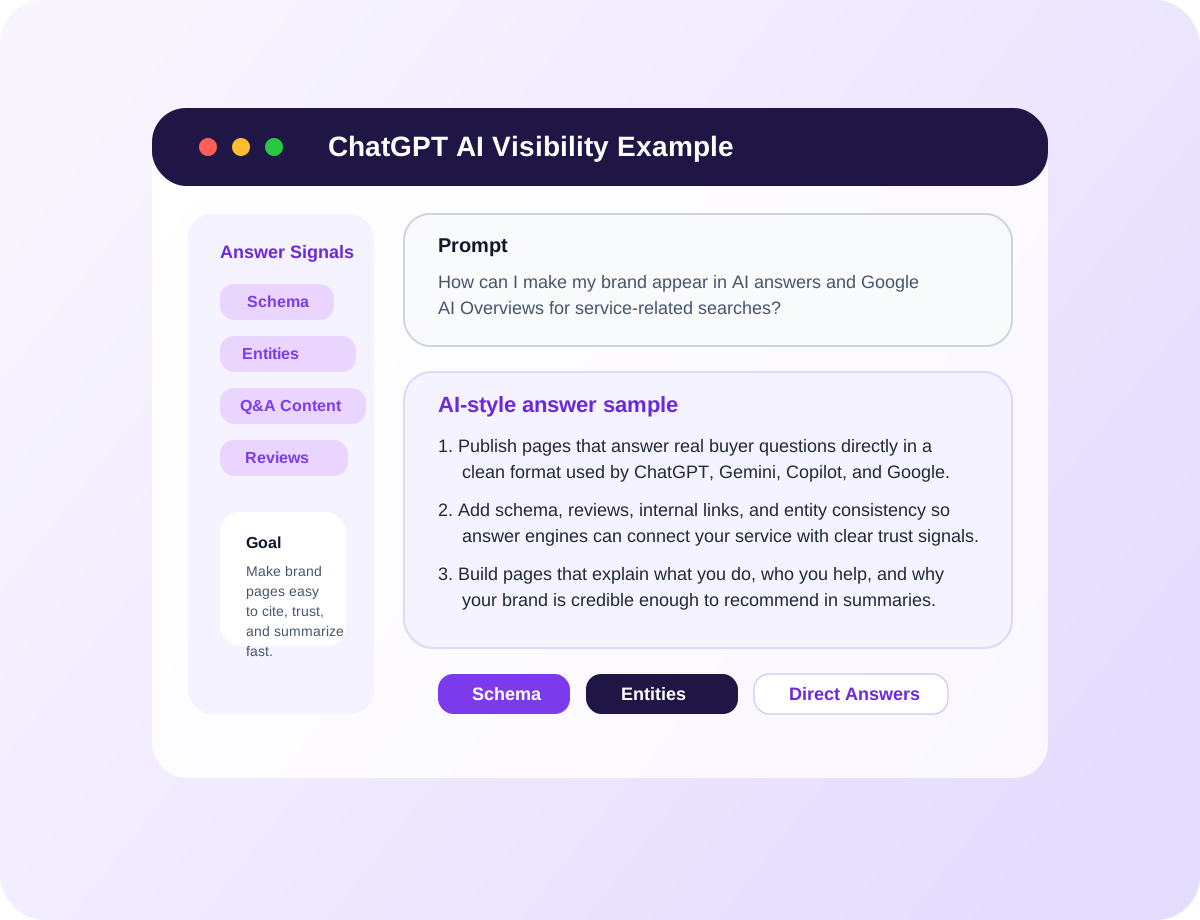
User prompt: "How can I make my brand appear in AI answers and Google AI Overviews?"
The strongest answer pattern usually includes structured content, question-led pages, schema, entity consistency, internal linking, expert content, and clear service positioning. It is not enough to publish a few generic pages. Your site needs a connected trust system that answer engines can interpret quickly.
AE ADS helps brands build that system by aligning service pages, supporting content, FAQs, schema, and digital trust signals so your brand is easier to summarize, easier to trust, and more likely to be surfaced across AI-driven discovery experiences.
The strongest brands in AI discovery usually get these foundations right first.
Your site, business profiles, and third-party mentions should all describe your brand consistently so answer engines can understand who you are and what you do.
Pages that answer real questions clearly are much easier for AI tools to summarize than pages filled with vague marketing language.
Schema, reviews, updated content, author signals, and transparent service descriptions all help build stronger AI and search trust.

When educational pages connect logically to service pages, FAQs, and commercial pages, AI systems can understand your topic map better.

For Dubai-focused brands, local SEO, map relevance, service-area language, and UAE-specific content remain critical to discovery.
A page that looks clear, modern, and trustworthy helps human visitors stay longer and gives stronger quality signals overall.
A modern search strategy needs trust, clarity, and content that works across Google and AI platforms.
Google Reviews★★★★★"AE ADS helped us rethink our website for the new AI search landscape. The content now explains our services much more clearly, and the overall trust signals are far stronger than before."
Google Reviews★★★★★"What stood out was how they connected SEO, structured data, internal linking, and AI discovery into one strategy. It finally feels like our site is built for how people search in 2026."
Google Reviews★★★★★"They did not just talk about trends. They translated ChatGPT, Copilot, and AI search changes into practical page improvements we could actually use for lead generation."
A practical implementation view for businesses that want stronger trust, stronger mentions, and stronger conversion paths.
Businesses often ask what they should actually change on a website if they want more visibility in AI assistants. The answer is rarely one tactic. It is a layered improvement process that makes the website easier to trust and easier to summarize.
Many service pages still speak in generic language such as "innovative strategies" or "results-driven solutions." That wording is too broad for both users and answer engines. A stronger page clearly explains the service, the audience, the process, the business value, and the expected outcomes. If you offer SEO in Dubai, say whether you cover local SEO, technical SEO, multilingual SEO, content strategy, healthcare SEO, e-commerce SEO, or lead-generation-focused SEO. Clear service language helps AI tools classify your brand more confidently.
Answer engines perform especially well when users ask nuanced questions. That means your website should contain pages and sections that mirror how people really ask. Examples include:
When your site addresses these questions directly, it becomes easier for answer engines to reuse that logic in their summaries. This is one reason FAQ content, comparison content, and expert explainers are so useful in 2026.
AI tools are not only looking for a service label. They are looking for confidence. Confidence comes from repeated signals. Those signals include reviews, consistent NAP information, up-to-date content, authorship, structured headings, trust-focused FAQs, and external mentions that align with your main website messaging. If your site claims expertise but the wider web offers little support, the brand looks weaker. If your service pages, social proof, and supporting content all reinforce the same narrative, the brand becomes easier to trust.
Internal links are not only useful for SEO crawling. They help establish topic relationships. If your main SEO page links to local SEO, technical SEO, content marketing, case-study style pages, and FAQs, you create a stronger topical map. This helps search engines and AI systems understand the breadth and depth of your expertise. For this reason, strong internal linking should connect educational pages to commercial pages and high- intent conversion pages such as SEO services in Dubai and contact us.
One of the biggest mistakes brands make is trying to "optimize for AI" by publishing flat, repetitive copy. That usually weakens trust. The right approach is to write clearly, naturally, and specifically. Good AEO content sounds like a knowledgeable specialist explaining a topic to a real client. The tone should be useful, direct, and credible. AI tools are more likely to rely on content that has strong structure and real substance rather than filler.
People increasingly use AI tools to think out loud. They ask scenario questions, not only definitions. For example:
User prompt: "We are a premium clinic in Dubai. How do we become more visible in ChatGPT and Google for healthcare SEO topics?"
A useful answer engine response would likely mention medical trust signals, local SEO, authority content, patient-intent queries, E-E-A-T, structured data, and careful compliance. If your site already contains detailed content in those areas, your brand becomes easier to cite or infer as relevant.
Another example:
User prompt: "Which company should I shortlist if I want help with SEO, AEO, and AI search optimization in Dubai?"
A strong website supports this kind of question by showing strategic clarity, service detail, industry understanding, and a process that feels real. This is why modern service pages should not just sell. They should teach, reassure, and differentiate.
AEO is not a one-time change. As search habits evolve, your site needs regular updates. That includes refreshing service pages, publishing new FAQs, expanding coverage around industry-specific needs, and updating examples so your content reflects the real 2026 landscape. Businesses that invest in this consistently will usually build stronger trust than businesses that treat AI search as a trend and leave their old pages untouched.
The broader lesson is simple: the future belongs to brands that explain themselves clearly. In an AI-driven search environment, clarity becomes a competitive advantage. If your website helps answer engines understand who you help, what you do, why you are credible, and how a buyer should move forward, you improve not only visibility but also conversion quality.
Common questions about answer engine optimization, AI discovery, and brand visibility in ChatGPT and Google AI search.
Common questions about answer engine optimization, AI discovery, and brand visibility in ChatGPT and Google AI search.
Answer engine optimization is the process of making your content easy for AI assistants and search engines to interpret, trust, summarize, and recommend. It builds on SEO but fo...
SEO focuses on improving visibility in traditional search results, while AEO also targets AI generated answers, conversational discovery, and answer interfaces such as ChatGPT,...
Yes. Many users now ask ChatGPT and similar tools to compare services, explain options, shortlist providers, and clarify what to look for before they ever visit a website. That...
Businesses improve their chances by publishing clear service pages, direct answer content, strong FAQs, structured data, consistent brand information, trustworthy off page signa...
Absolutely. Google remains central to discovery, especially for local and transactional intent. The strongest strategy in 2026 is not to choose between Google and AI, but to bui...
Yes. Local businesses in Dubai benefit from AEO because users now ask AI tools for recommendations, comparisons, and next steps before deciding which local brand to contact or v...
Let AE ADS help your business improve visibility across Google, ChatGPT, AI search tools, and answer engines with a modern strategy built for 2026.
Internal Navigation
Continue browsing the most relevant AE ADS pages for services, proof, company details, and next-step actions.
Conversion
Connect SEO and AEO visibility with qualified lead generation campaigns.
Visit page→Content
Build stronger topic authority with content designed for search and conversion.
Visit page→Maps & Local
Improve Google Business Profile visibility, local intent targeting, and city-level discovery.
Visit page→Technical
Fix crawlability, indexing, structure, and performance issues that hold search growth back.
Visit page→